







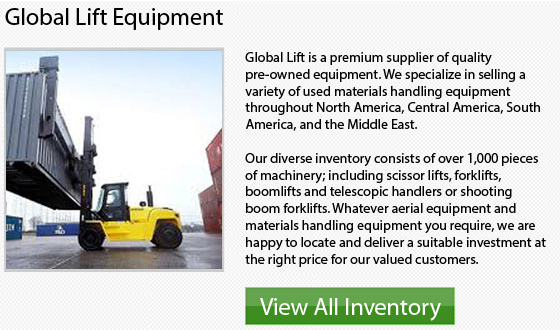
Forklifts have gone through a major change since their launch to the market in the 1920s. These machines are now much stronger and smarter. These types of machinery have revolutionized the material handling world and have become exceptional workhorses in our distribution and warehouse centres all around the world.
The first lift trucks about 100 years ago, began as very simple pieces of motorized equipment which were only capable of transporting pallet loads from one place to another. These days, really advanced models are offered in the marketplace. These units are available in a huge array of weight capacities, many lifting heights and different designs. Additionally, these machinery are available with various ergonomic designs to enhance operator comfort and many new safety features. Keeping the operator as comfortable as possible could really increase the overall productivity attained during a shift.
A key feature placed on nearly all of the available lift trucks on the market are tires and forks. Tires enable the equipment to move around and the forks could carry and lift loads. The basic application and design of different types of lift trucks used in distribution facilities, warehousing operations and manufacturing facilities is covered in this article.
Counterbalanced Lift Trucks
Counterbalanced Forklifts comprise: IC or Internal Combustion models, as well as Electric Trucks.
Narrow-Aisle Forklifts
Narrow Aisle Forklifts include: Turret Trucks, Reach Trucks and Order-Pickers.
Low Lift Pallet Jacks or Pallet Trucks
Pallets Jacks consist of Electric-Powered Pallet Trucks as well as Non-Powered Pallet Trucks.
Counterbalanced Forklift Trucks
The forklift is the most common type of lift truck. This model is the counterbalanced, sit-down version. A weight found in the rear of this equipment is responsible for counterbalancing the weight of the load. The counterbalance is what prevents the forklift the truck from tipping over.
Usually, a counterbalanced lift truck has a lifting height of around 16 feet, 189 inches is the most popular. Furthermore, these models are capable of lifting a range between 4,000 to 6,500 pounds. Counterbalanced lift trucks are offered with backup alarms and various other types of safety features like lights.
The forklift market is currently divided into about 60 percent electric models, with 40% IC units. Each kind of forklift has a particular place and is ideal to complete lots of various jobs. Depending on whether or not you will be using the machine outside or inside and what kind of surfaces and terrain you will be operating on, as well as what particular kinds of cargo you will be utilizing determines the kind of lift truck which you would select.